Sunday, May 31, 2009

Lakeshore Bikepath


We happily discovered the lakeshore bikepath this weekend. It took about the same amount of time as riding the El to get all the way downtown, and was much more enjoyable.


Here's the inside of the auditorium structure in Millenium Park.


The auditorium from the front.


Can't get enough of the Bean.


From the skybridge to the new Modern wing of the Art Museum, looking back at Millenium park. The Modern wing is really nice with all natural light and tons of cool stuff including a big display of Joseph Cornell's boxes.


Michigan Ave. from the skybridge.


Starting back on the bikepath.


Wednesday, May 27, 2009

Happy Birthday Mom!

After more than a year of Mom asking me to "put some pictures up on the blog"--her wish is finally granted! Here's Phoebe and Marcel.


Tuesday, May 26, 2009

Starved Rock


We went to Starved Rock Il state park for memorial day. Here are a few pics...


There were tons of cool bluffs along the Illinois river carved from sandstone by glaciers.


Look close and you can see Caitlin standing behind the waterfall.


Wednesday, August 01, 2007

Summer in Missouri

Mom and Caitlin at Dickerson Park Zoo.


Dad shows Caitlin how to shoot a pellet gun.


The killer instinct is aroused.

Bullseye!


Caitlin with my new banjo on the back porch.


Dad's 64 Mustang.


Mom and Mac Dog on the back porch.


Missouri sunset.

Friday, January 05, 2007

New Year's Meal 2007

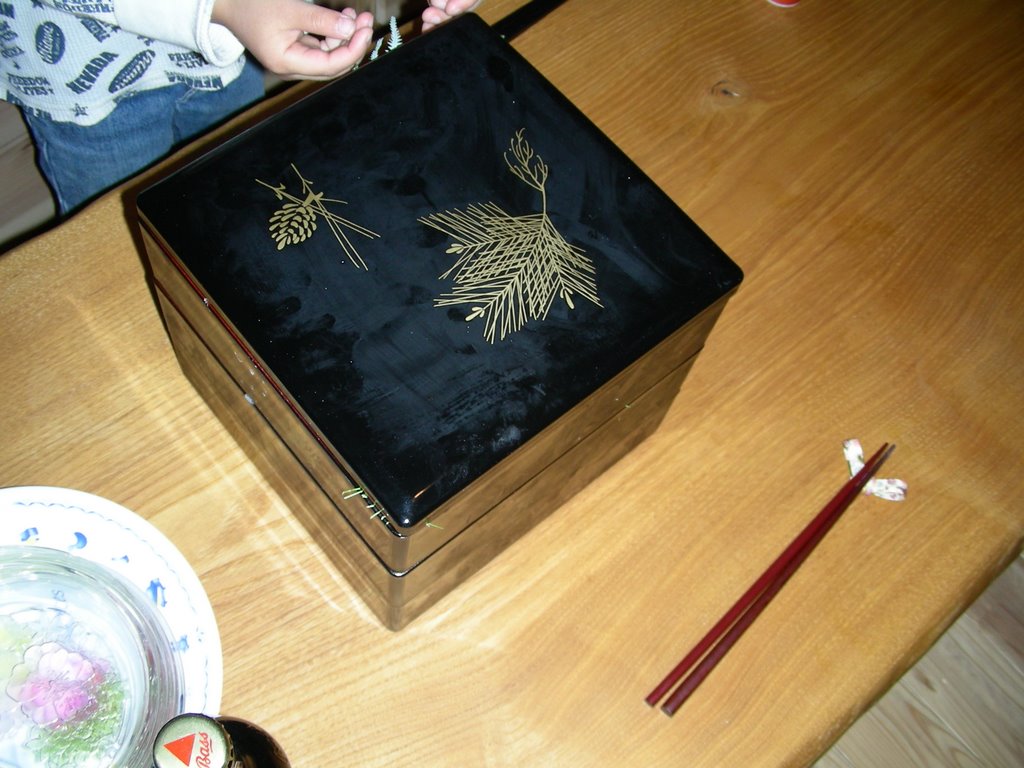
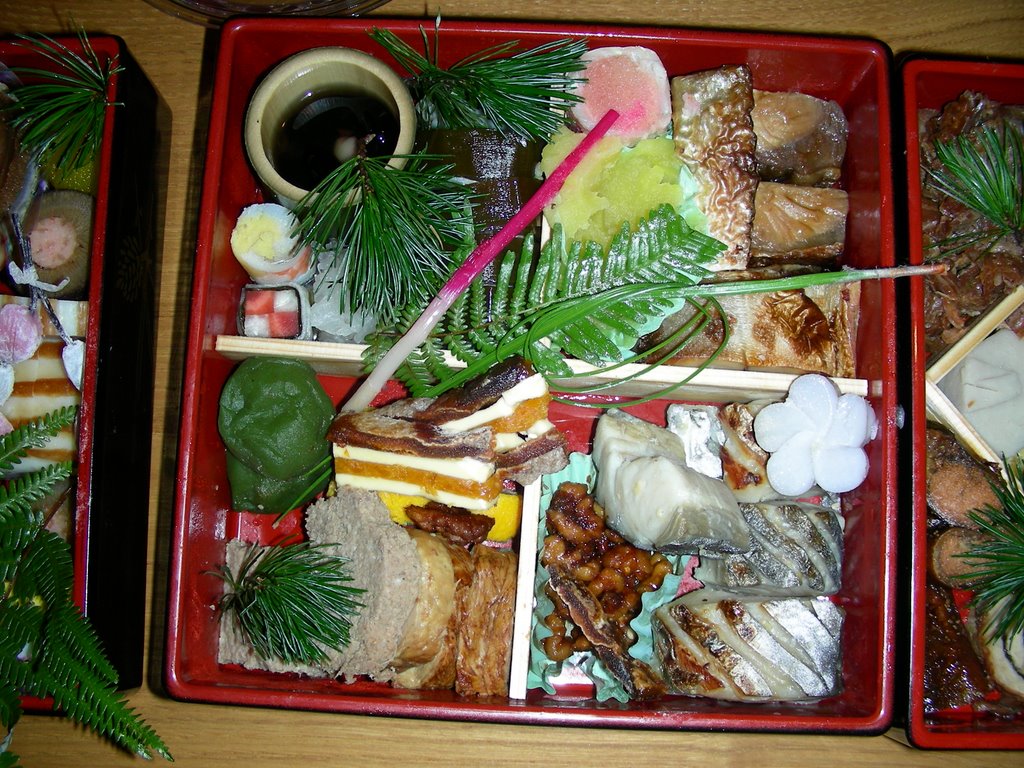
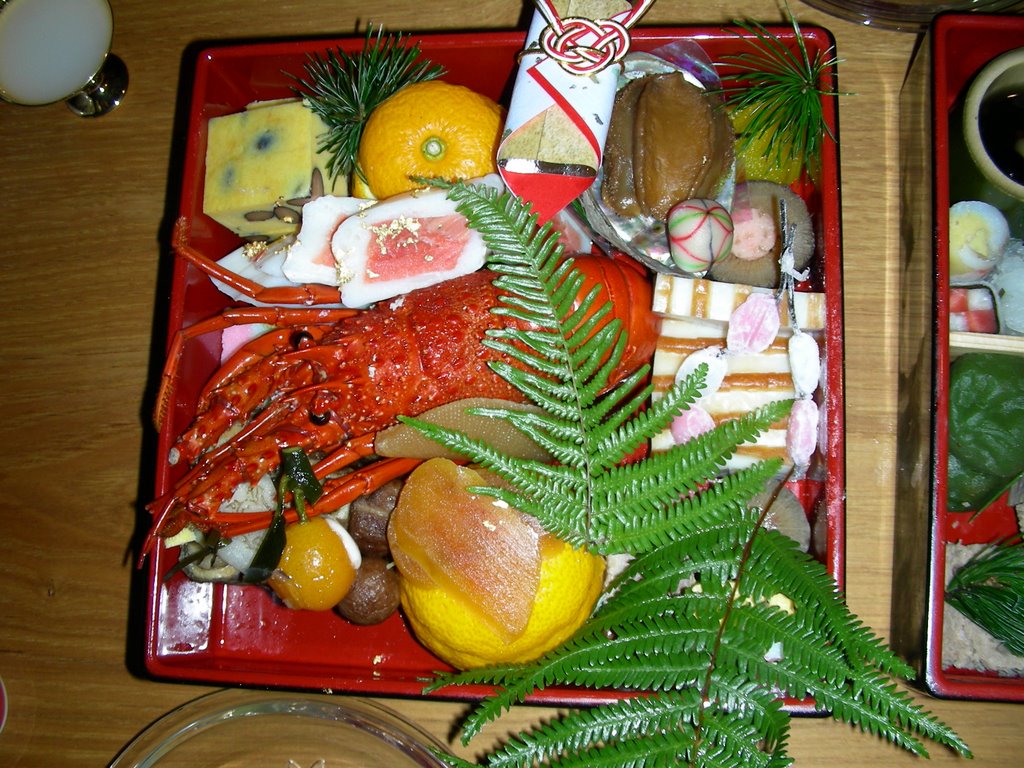
For a special New Year's, Daisuke and Makiko invited us over for traditional o-sechi, the traditional boxed food eaten only in the first few days of the new year. All the food inside the osechi boxes (jubako)is prepared before the end of the previous year and is meant (in part) to appease the gods of fire by avoiding the use of fire. Most of the individual osechi foods also have a specific symbolic meaning and Japanese can pay hundreds of dollars for a single set. Ours were originally a gift from Daisuke's father.
These boxes were full of different kinds of Japanese caviar, fish, and even rolls made out of the rubbery (but delicious) flesh of giant sea-slugs.


Christmas Day 2006

On Christmas Day our friends Makiko and Daisuke invited us over for a sumptuous feast and an evening of gingerbread train making (we'd constructed the gingerbread parts a few weeks earlier). As Christo pointed out, a continuation of my valiant efforts to keep the family tradition of gingerbread making alive.


The train, complete with marzipan animals.


A close-up.


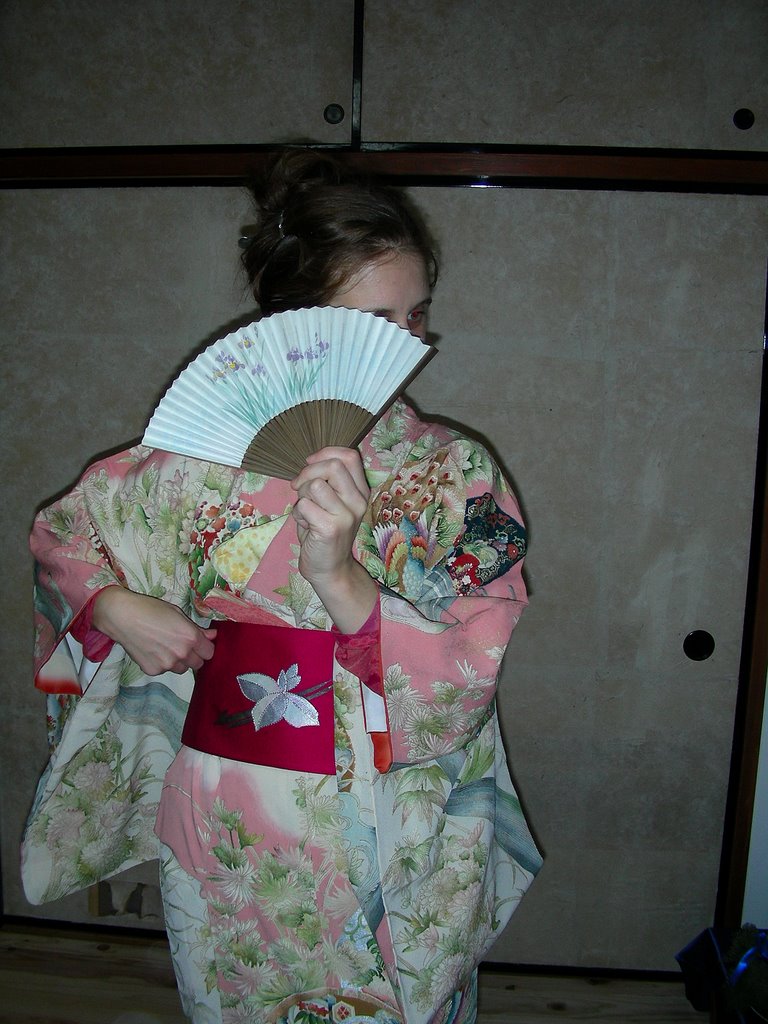
Later in the evening Luna dressed up in my beautiful silk kimono (praised again by Makiko).


And we all drank wine and sake and were looking rather cheerful!


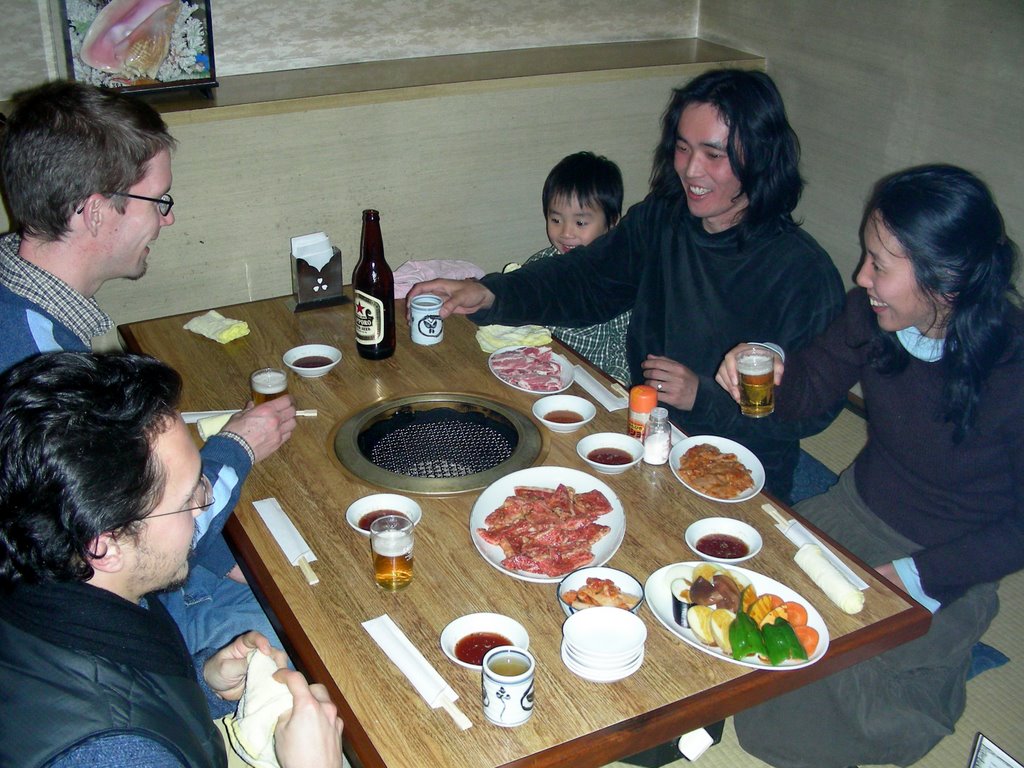
For some reason I didn't end up with any good pictures of M, D and Y so here they are at the Japanese-style barbequed meat meal we had the evening before (after visiting Ise).

Thursday, December 28, 2006

Ise

On Christmas Eve day our friends Makiko and Daisuke drove us all down to Ise Shrine in Mie Prefecture. Ise Shrine is the center of the Shinto tradition in Japan, and is known as the home of Amaterasu, the Sun Goddess from which all the warmth and light of the world emanates.
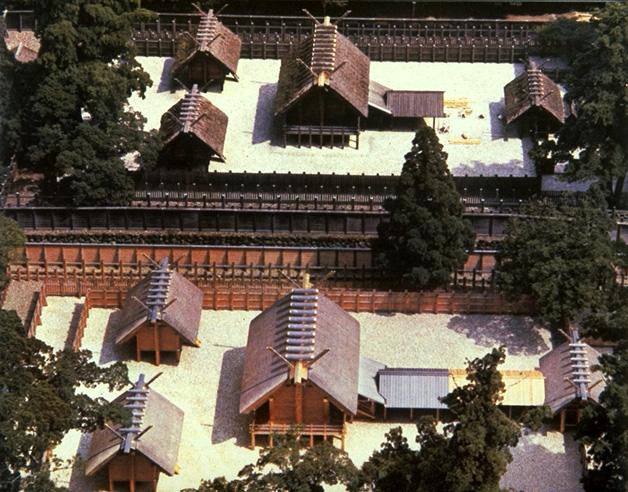
Most of the inner shrines cannot be entered and photos are generally discouraged. So here is a borrowed aerial shot (which gives some sense of the layout and architecture of Ise).


Along with Yuki (Makiko and Diasuke's four year old) we learned the proper way in which to make offerrings to the kami (gods and goddesses) of Ise. Because the kami are invisible or absent--always shrouded in kind of mystery--one approaches their shrine and then claps twice in order to capture their attention. Then one throws a coin into the offerring receptacle, and silently announces one's name and place of origin, bowing twice at the end.


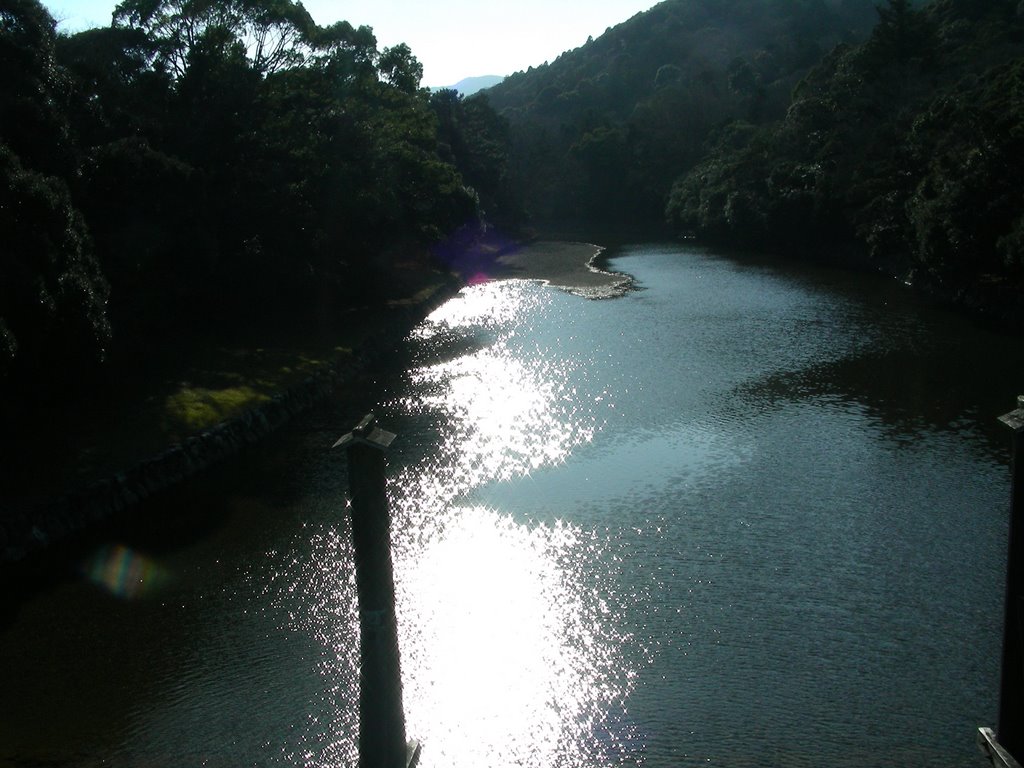
The beauty of Ise--and it is one of the most beautiful places I have visited in Japan--is all but impossible to capture in photographs. The grounds of the Shrine are vast and filled with hinoki (cedar) so old and enormous that they easily rival the giant redwoods of northern California. And although there gardens of moss and carefully pruned pines in the walk leading to the inner shrine, all attempts at human landscaping quickly dissapear into the wildness of the hills and rivers that surround Ise.


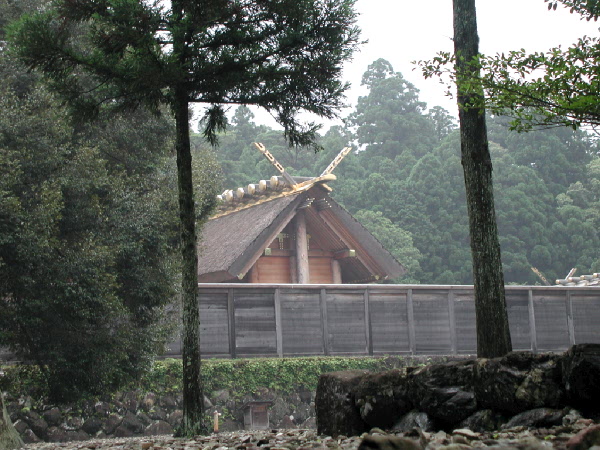
Here is a glimpse of one of the shrine buildings. In a custom unchanged for some 1200 years, every human-made structure on the grounds have been rebuilt every 20 years. The carpenters employed can use only primitive hand tools and materials are brought from every corner of the Japanese islands.

As the emporer and empress of Japan are said to descend from Amaterasu herself, they are the only two human persons allowed to enter the inner grounds of her shrine.


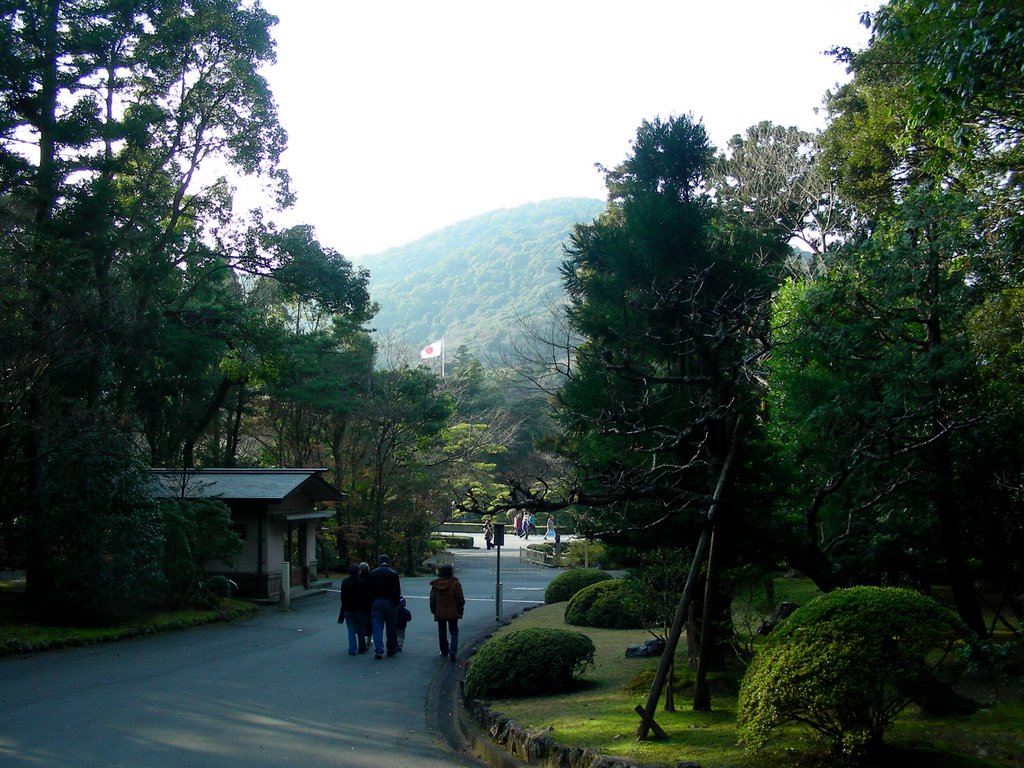
Here the Japanese flag waves in the distance.


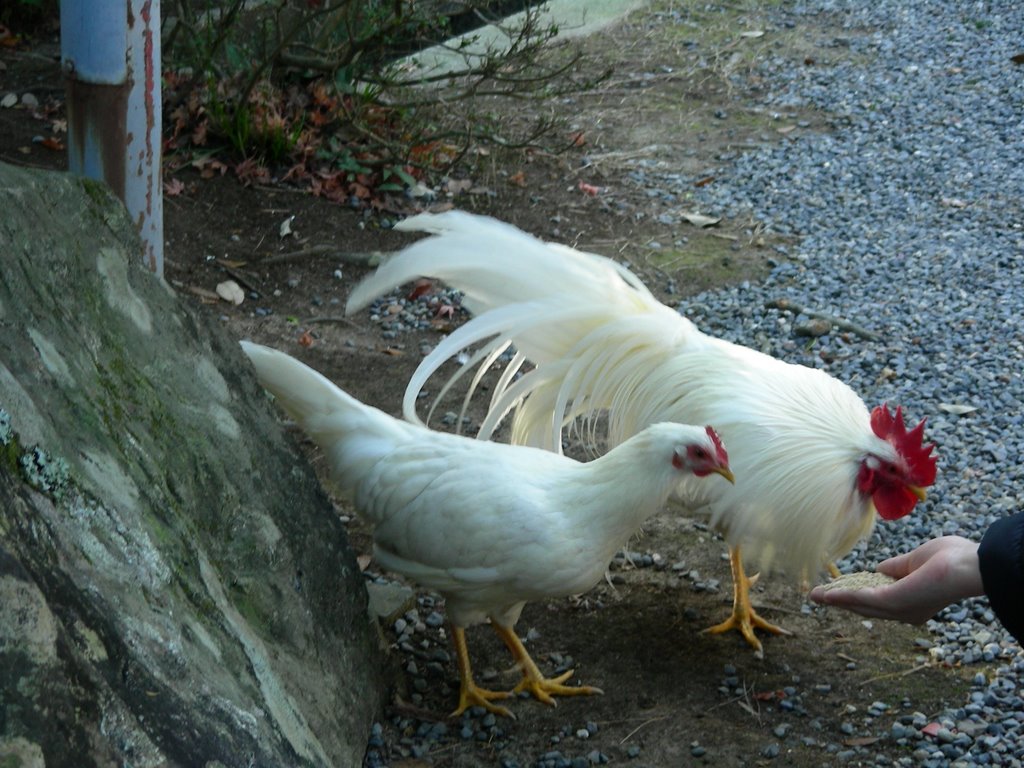
In Shintoism, the color white is sacred and therefore all manner of white creatures are kept on the grounds of the shrine--white horses, white fish and white hens and roosters.


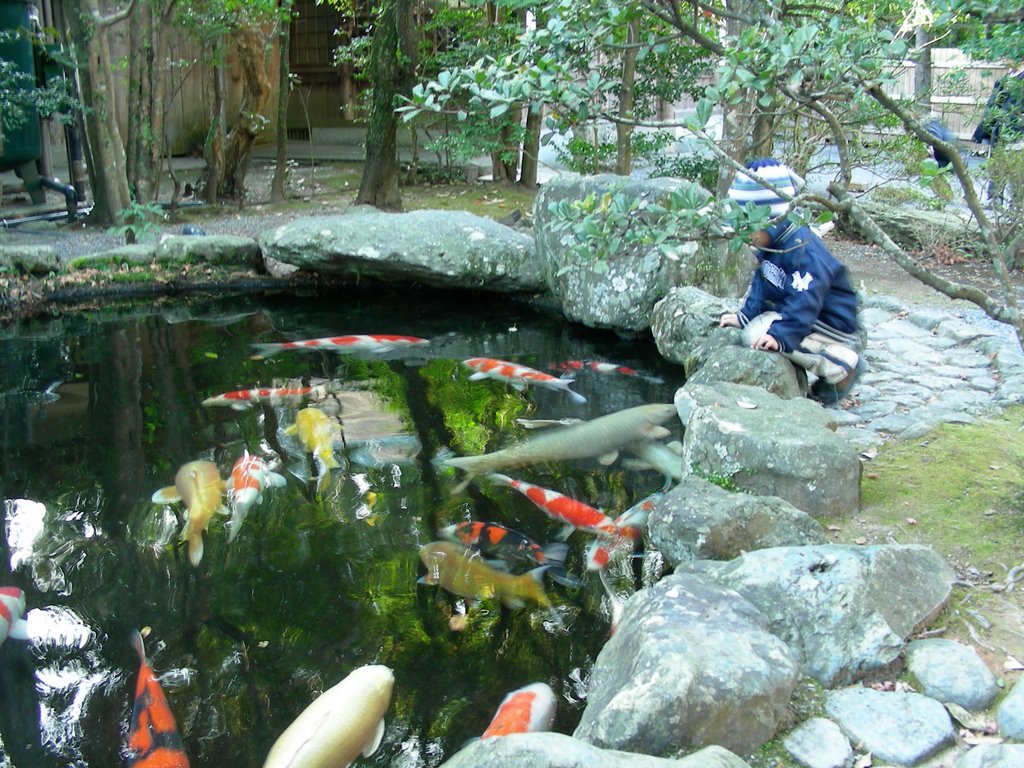
Yuki looking at some koi (not all were white!).

After leaving the SHrine itself, we walked the traditional path leading up to it--a narrow street filled with traditional merchants and their wares.

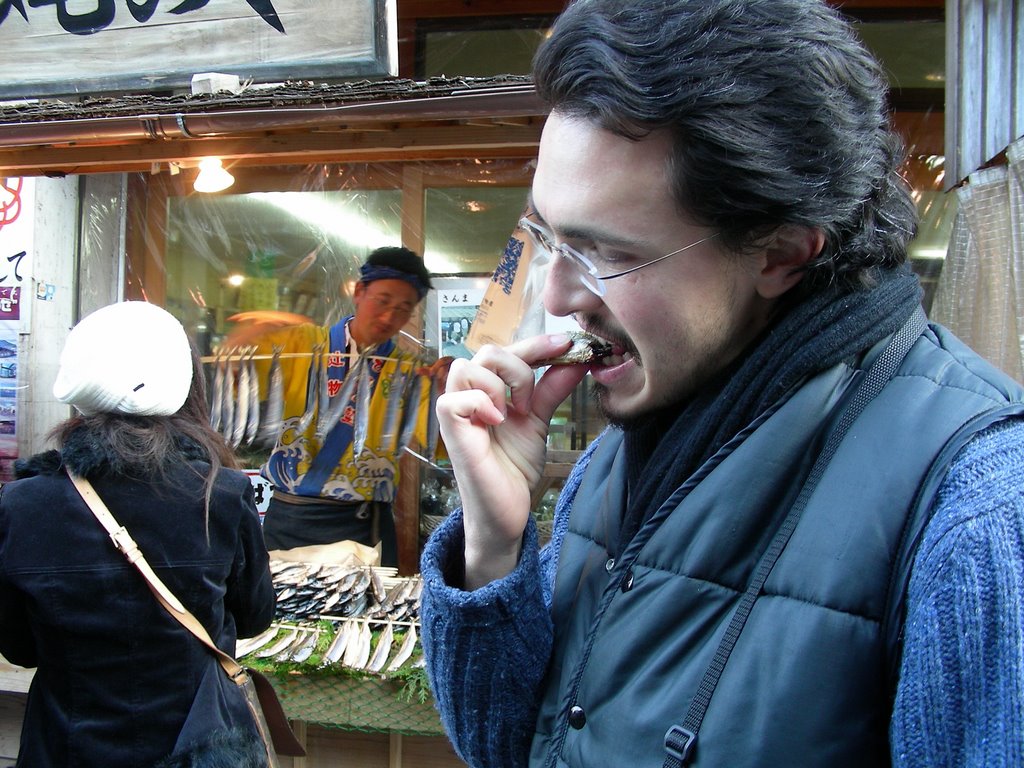
Christo sampling a kind of fish called sanma (strung up everywhere on lines along the road).


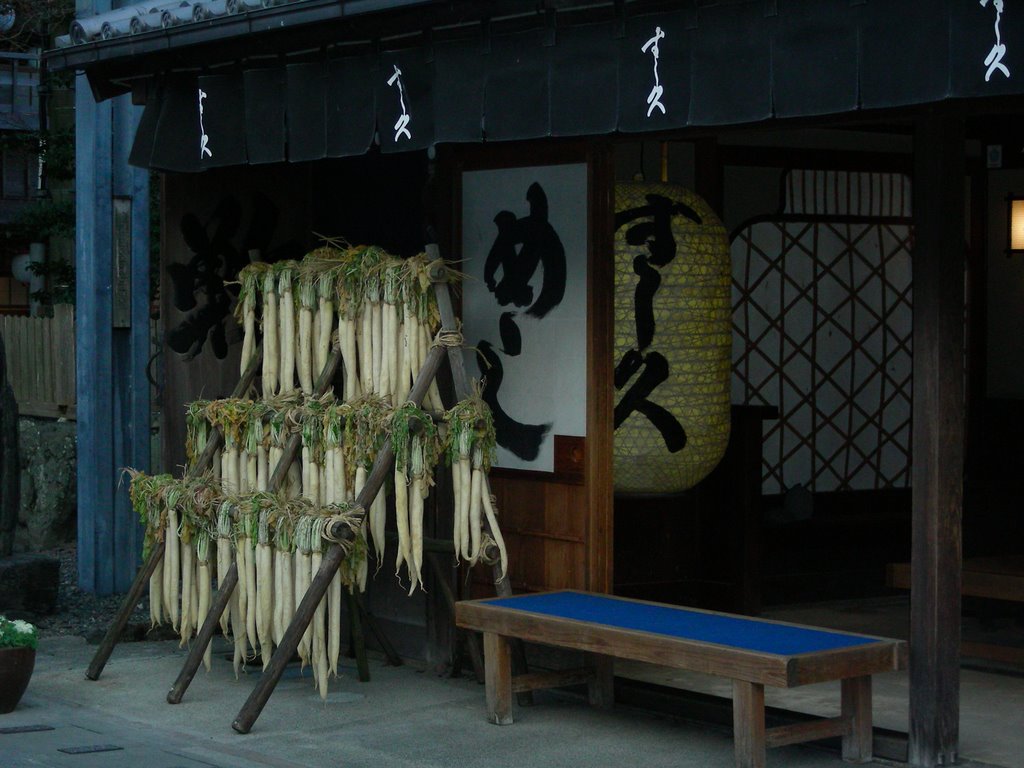
Daikon hanging out to dry for winter pickles.


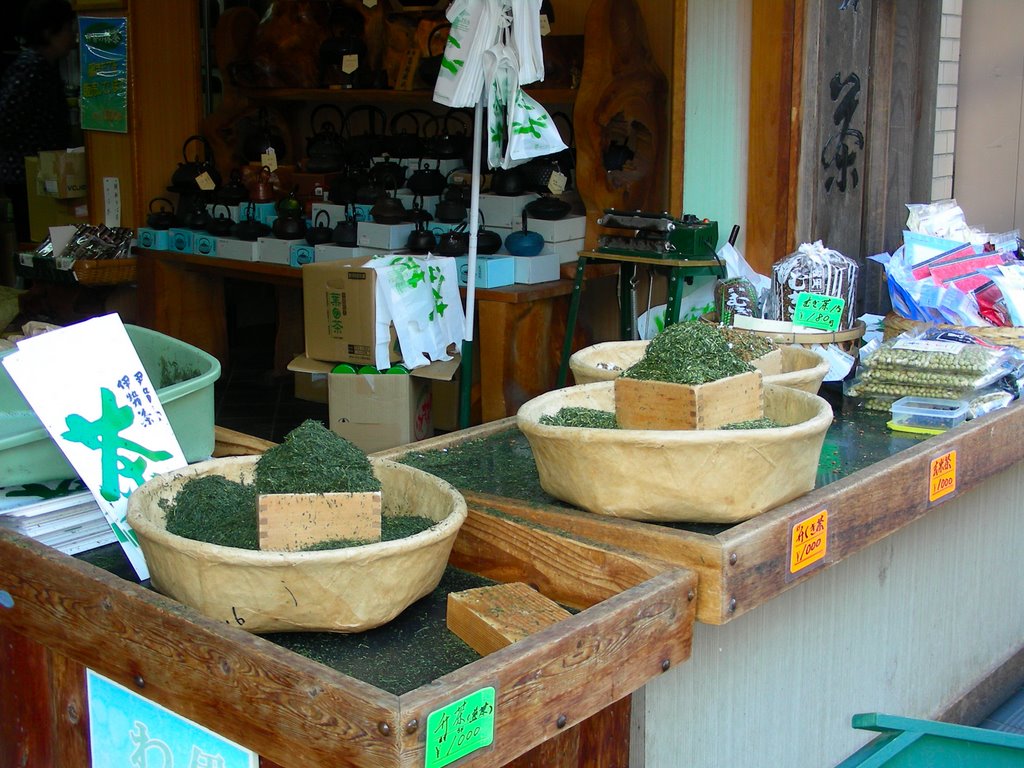
Loose-leaf green tea from the tea fields around Mie.

Takayama

On the 21st we left for Takayama, a small sort of tourist town in the mountains that originally served as a hideout for defeated and dishonored samurai after the Battle of Sekigahara. The train ride was quite breathtaking, following a rushing mountain stream through the Hida valley--a fact dampened only by the length of time it took to get there (eight hours as opposed to two and a half by bus).


This was one of the farming villages we passed along the way. The area is famous for its beef, mountain vegetables, river fish, and green tea.


Here is a view down from the surrounding hills on part of Takayama. This part of the town is still maintained the way it was hundreds of years ago--a patchwork of small homes and barns surrounded by vegetable beds and a family grave plot (side by side).


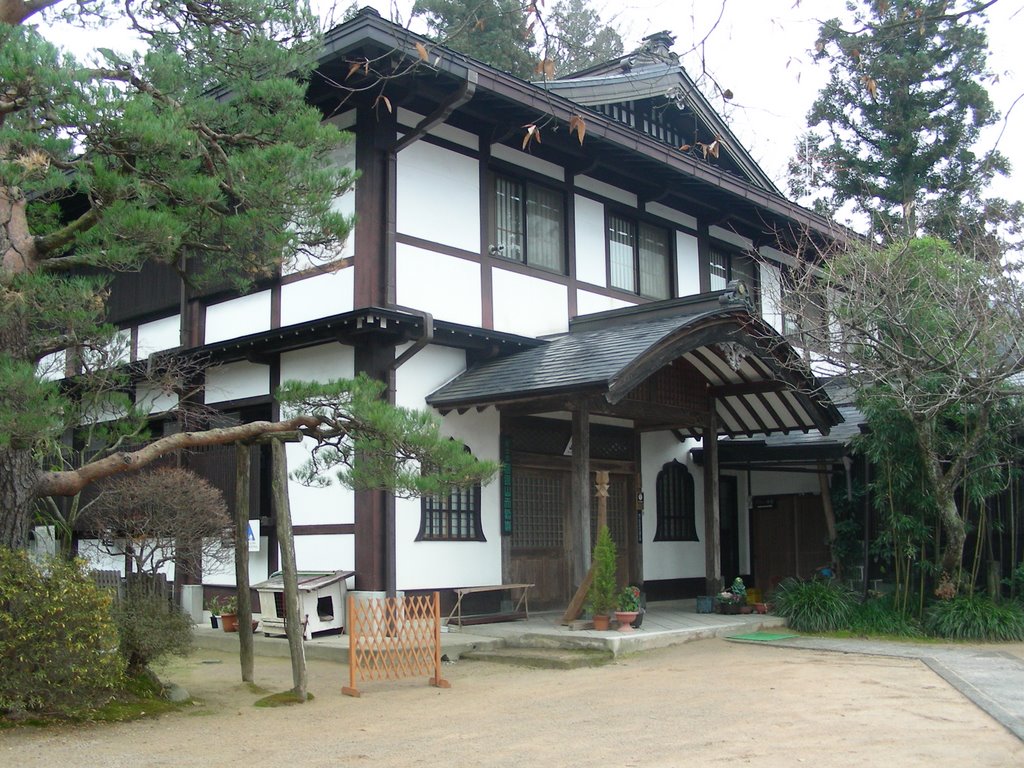
By far one of the best parts of Takayama was the was the hostel--housed within a fully functioning Jodo Shinshu (Pureland) Buddhist Temple. We had a hot breakfast every day cooked by the Priest's wife (miso soup and rice and pickles).
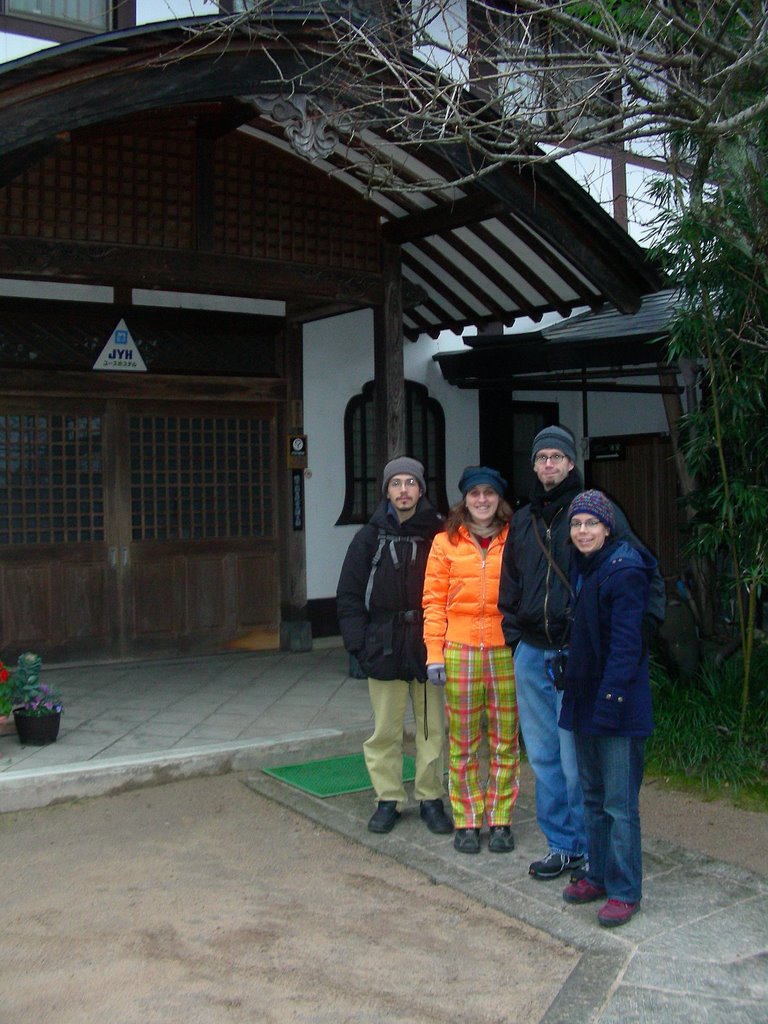
There was also a huge, hot steaming communal bath which we enjoyed tremendously after coming in from the cold. The hostel genkan (main entrance) is depicted at the right.


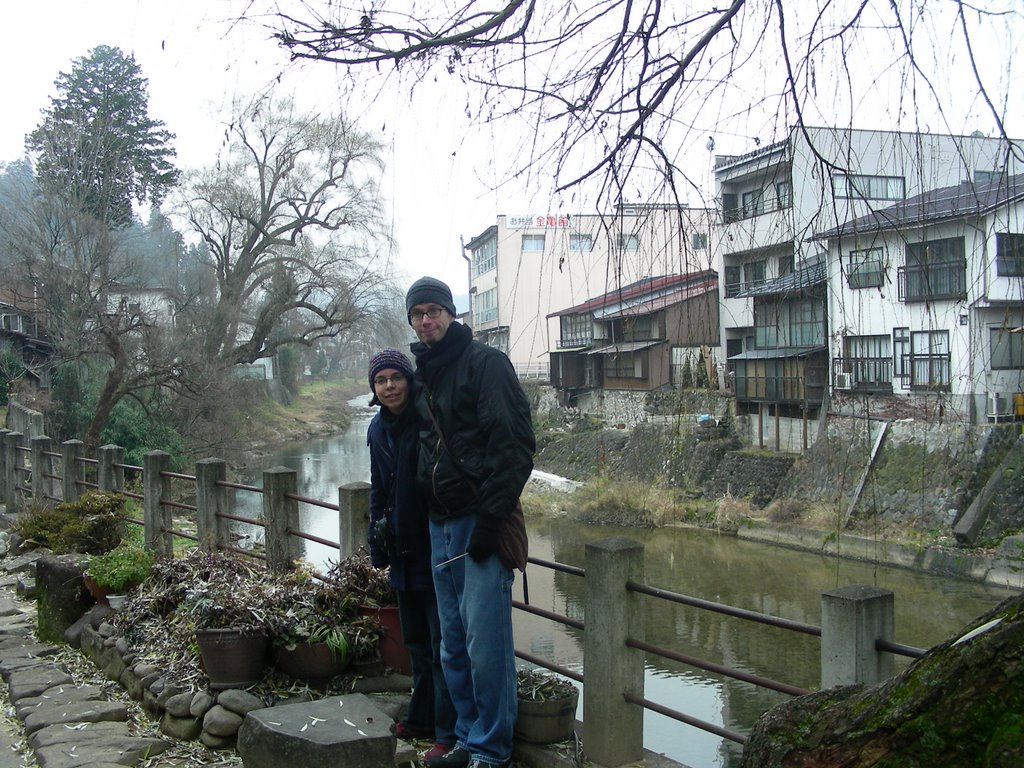
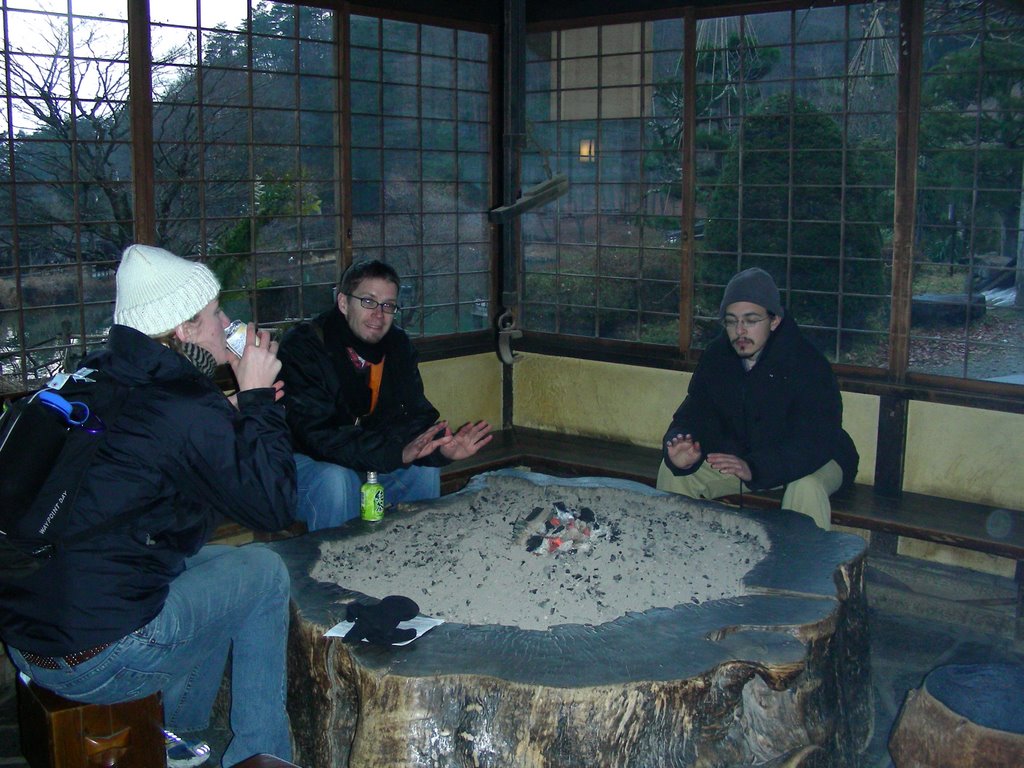
The rare group photo! On the morning of the 22nd we set out for the old town and folk village with Kate, an energetic Canadian grad student in Japan for the winter break (and our photographer, in this case).


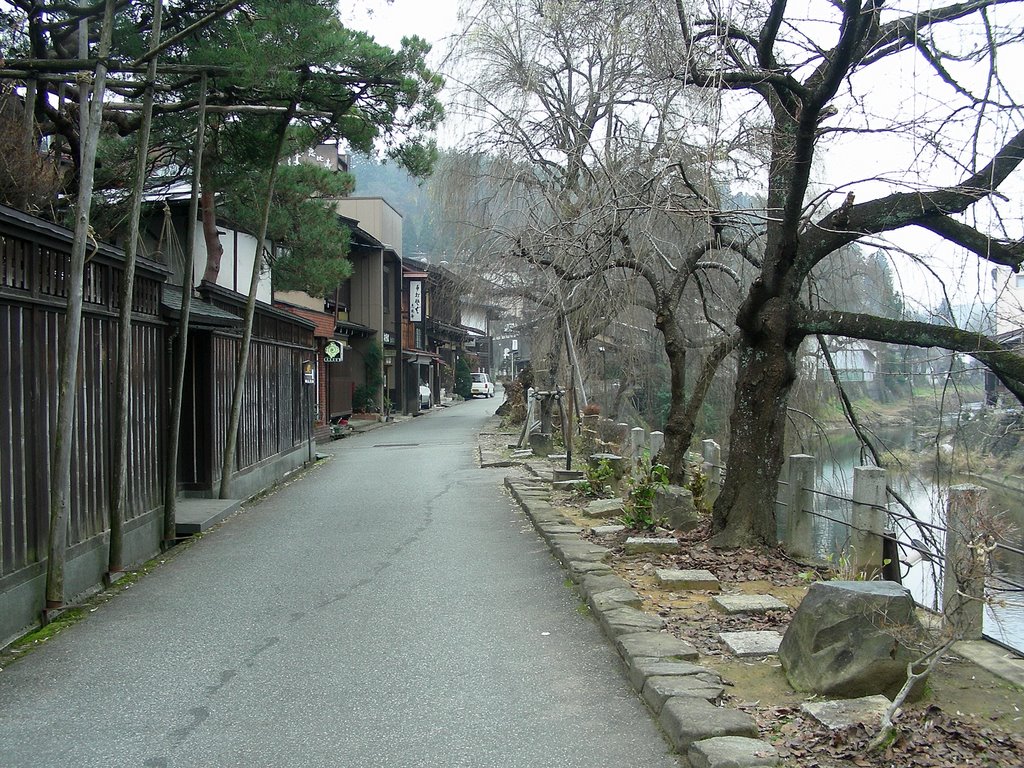
The streets of Takayama's old town are generally preserved as they were one or two hundred years ago. Although so-called "preserved towns" in Japan serve primarily as tourist attractions, they are 'lived' centers nevertheless and keep alive many of the old traditions of Japan, much like Japanese temples and monasteries.
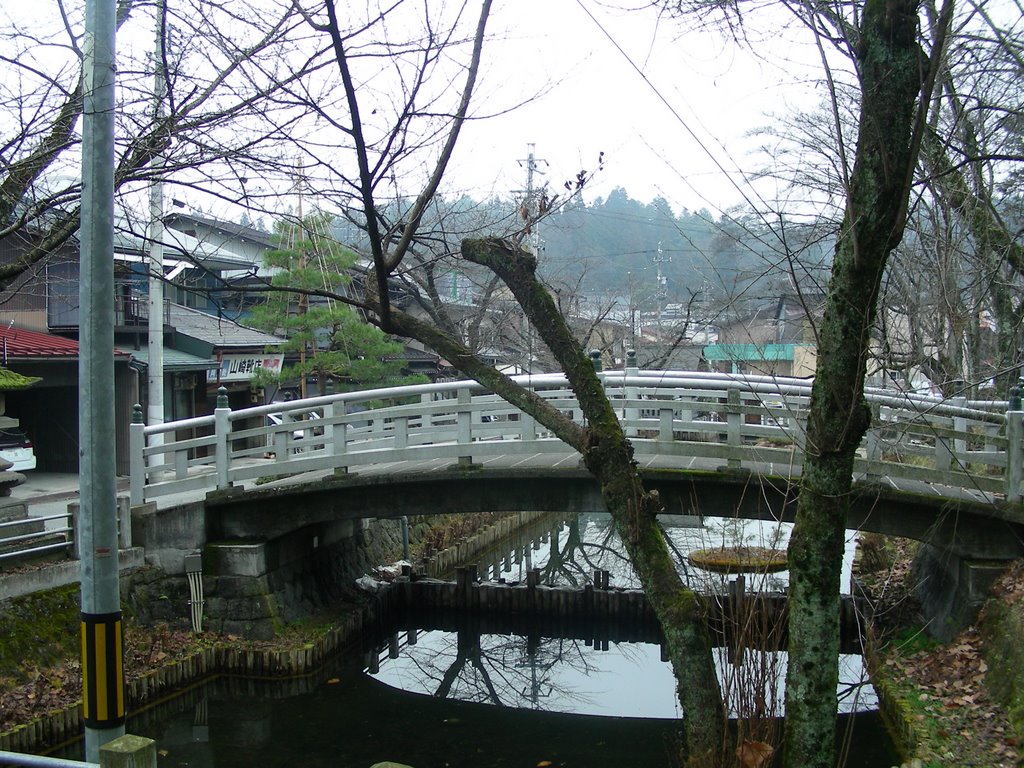
Takayama is spliced by at least three or four mountain rivers, as well, most of which are still contained by old stone flood walls. Cherry trees were everywhere, so the town must be gorgeous in the spring.


Along the way we enjoyed some of Takayama's delicacies--small taiyaki (fish shaped pancakes)filled with red beans and chocolate, gosei mochi (grilled mochi shaped like olf Japanese money and smothered in a delicious miso and sesame seed sauce) and skewers of Hida beef.

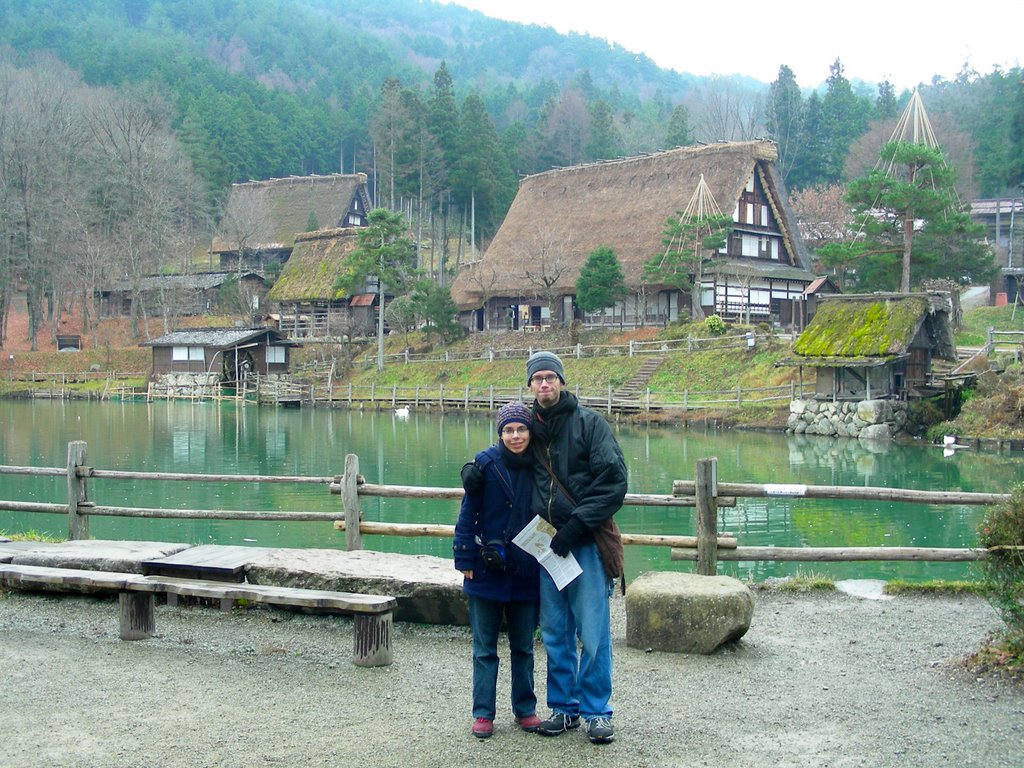
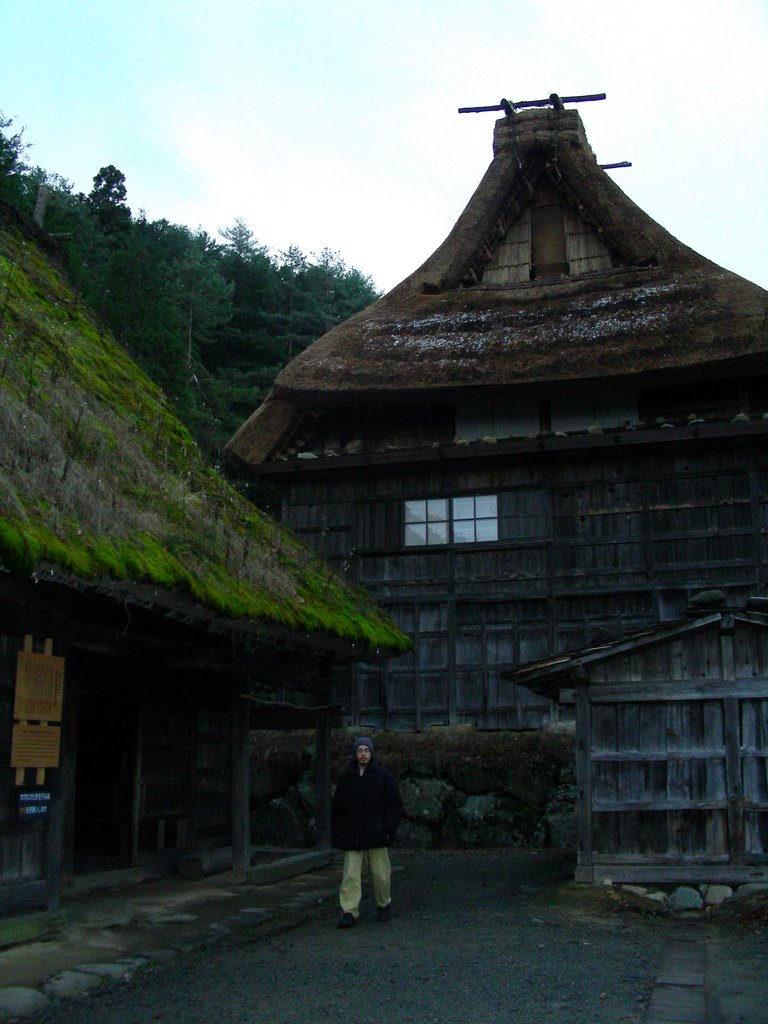
This first picture is of me and Bradley out in front of the lake in front of the Hida Folk Village--an "outdoor" museum centered around a number of Gassho-zukuri (thatched) style farmhouses that were slated for demolition during the period of dam-buildingling that lasted from the 1950's to the 70's.


Unfortunately the sun was beginning to set just as we arrived and so many of our pictures came out pretty dark and a little hard to make out.


Christo, Kate, and Bradley warming their hands around a traditional hearth...
Walking among the old houses it was easy to imagine oneself in old Japan, or at least on the set of a Kurosawa film. The day we went, however, the folk villages was almost completely deserted which made me feel a bit like a ghost floating around buildings which would once have been alive with the bustle of huge extended families, bright fires, and the smells of cooking food.


In no other country I have visited is the contrast between the old and the new so pronounced.